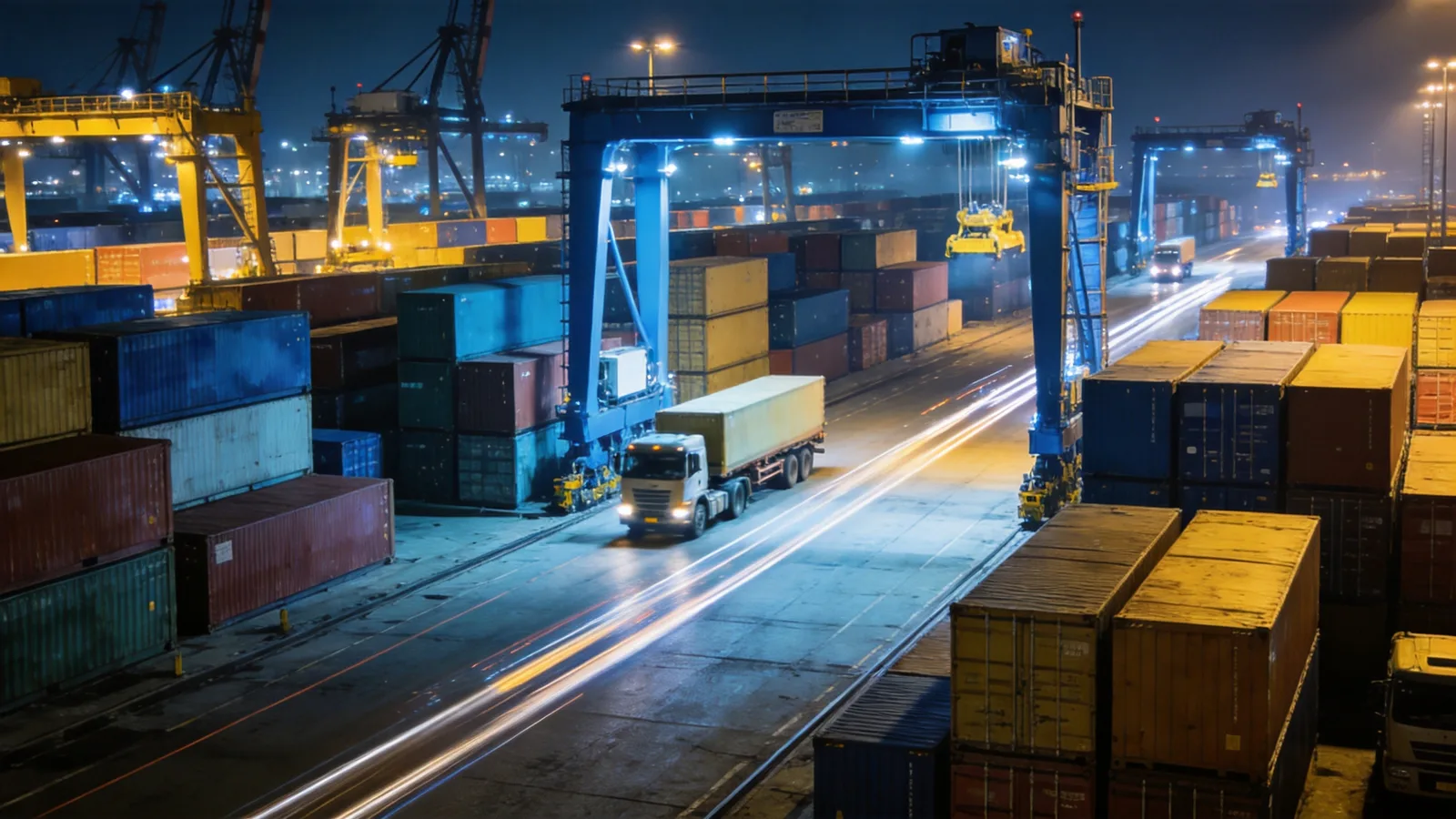
Illuminated container port at night with gantry cranes and stacked containers

Current intelligence records

Red Sea disruption persists — carriers still split between Red Sea and Cape routings

High
What changed
The Red Sea security crisis (Houthi attacks on shipping) since late 2023 continues to force some carriers around the Cape of Good Hope, making Jeddah-lane transit times and spot rates volatile.
Why it matters
On the same China→Jeddah lane, Red Sea direct sailings and Cape reroutings can differ by several days, so the quote range widens materially.
Which countries affected
Evidence

The Jeddah and Dammam port profiles in src/data/gcc-ports.ts record the Houthi attacks on Red Sea shipping since late 2023, the resulting Cape of Good Hope rerouting, and the impact on transit times and spot rates.

Source: Mawani — Saudi Ports Authority

Date
· Updated 2026-09-12
Confidence
High
Potential commercial impact
When quoting Jeddah, confirm with the carrier whether the sailing transits the Red Sea or the Cape; eastern-province or Riyadh cargo can also be priced via Dammam, whose Arabian-Gulf routing is unaffected.

Qatar e-invoicing law (May 2026) signals VAT is coming

Medium
What changed
Qatar passed an e-invoicing law in May 2026, which is recorded as a signal that VAT is coming and is widely expected at about 5%.
Why it matters
Qatar's current 0% VAT makes it the GCC's lowest-tax import market; that window is closing.
Which countries affected
Evidence

The Qatar country profile in src/data/gcc-countries.ts records in vatNote: "No VAT yet — expected to implement ~5% (e-invoicing law passed May 2026)."

Source: Qatar Customs (General Authority of Customs)

Date
· Updated 2026-09-12
Confidence
Medium
Potential commercial impact
Long-term landed-cost models should assume 5% VAT; near-term shipments can still use the 0% VAT advantage, but confirm the implementation timetable with a local agent.

Saudi agricultural tariffs raised to 5–15% across 51 lines (June 2026)

High
What changed
From June 2026, Saudi Arabia raised tariffs on 51 agricultural and food lines to 5–15%.
Why it matters
Agricultural and food importers face higher CIF-based duty costs.
Which countries affected
Evidence

The Saudi Arabia country profile in src/data/gcc-countries.ts records in dutyNote: "Agricultural and food tariffs were raised to 5–15% across 51 lines in June 2026."

Source: ZATCA — Saudi Customs / Tax Authority

Date
· Updated 2026-09-12
Confidence
High
Potential commercial impact
Agricultural and food importers should recalculate landed cost and confirm the HS-code-specific duty rate before SABER filing.

Saudi VAT at 15% — the highest landed-cost multiplier in the GCC

High
What changed
Saudi Arabia has charged 15% VAT since July 2020, up from 5%.
Why it matters
The 15% VAT plus 5% duty takes landed cost 20%+ above the invoice value.
Which countries affected
Evidence

The Saudi Arabia country profile in src/data/gcc-countries.ts records in vatNote: "15% since July 2020 (raised from 5%)."

Source: ZATCA — Saudi Customs / Tax Authority

Date
· Updated 2026-09-12
Confidence
High
Potential commercial impact
Model Saudi landed cost as CIF value × 1.2075 (5% duty + 15% VAT); do not quote from invoice value alone.

How to use this layer

Intelligence records are decision support, not quotes or guarantees. They turn a documented corridor change into a commercial question: ask the carrier about Red Sea versus Cape routing, confirm the Qatar VAT timetable with a local agent, or recalculate Saudi landed cost before filing.

Every record is grounded in the site’s structured data layer and its approved source registry. Confirm current figures with the relevant carrier, forwarder or customs authority before executing a shipment.

View the evidence center

Get a freight quote

Tell us about your shipment and we will connect you with verified providers on the China–GCC corridor.

Get a quote